
Can You Patch a Run-Flat Tire? Expert Guide
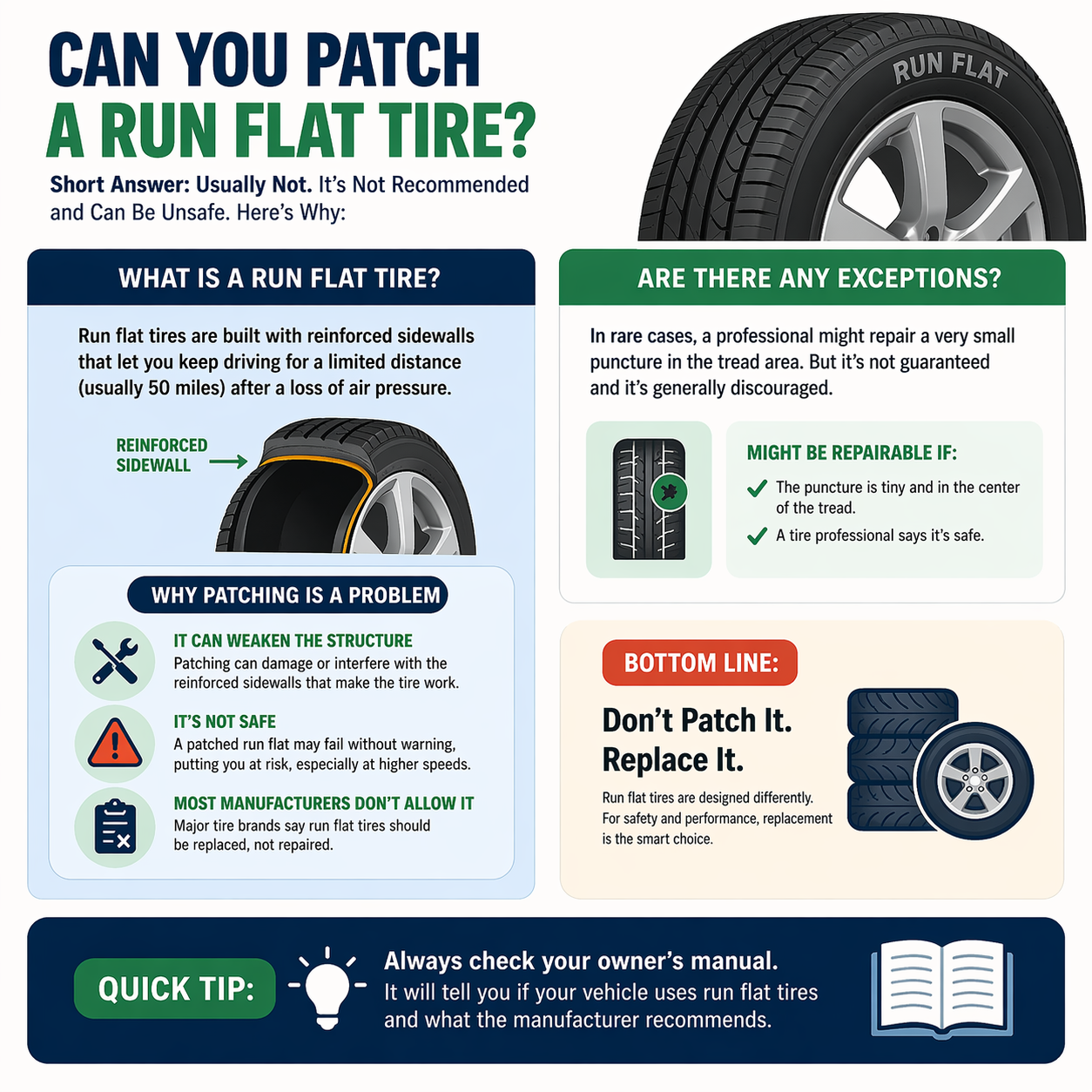
Run-flat tires are engineered for one thing: keeping you moving after a loss of air pressure. That capability comes at a cost, both in terms of price and repair limitations. So, the question is direct and practical: Can you patch a run-flat tire?
The short answer: Sometimes, but often, it’s not recommended. The longer answer depends on how the tire was driven, the extent of internal damage, and the manufacturer’s guidelines. Let’s break it down properly and state where tire shops come into the equation.
What Makes Run-Flat Tires Different?
Run-flat tires are not standard tires with thicker rubber. They’re structurally different.
There are two primary designs:
- Self-supporting run-flat tires: Reinforced sidewalls support the vehicle even with zero air pressure.
- Support ring systems: A rigid ring inside the tire supports the load (less common in passenger vehicles).
The key takeaway: Run-flat tires are designed to operate temporarily without air, usually for up to 50 miles at reduced speeds (typically under 50 mph).
That’s where the complication begins.
Why Run-Flat Tires Are Harder to Repair
When a conventional tire loses air, the sidewall collapses quickly, forcing the driver to stop. That limits internal damage.
Run-flats don’t behave that way.
You can continue driving, which means:
- The internal structure may be compromised.
- The sidewalls may overheat.
- Reinforcement layers may degrade without visible signs.
This hidden damage is the primary reason many shops refuse to repair run-flat tires.
When Can You Patch a Run-Flat Tire?
There are situations when repair is technically possible. A run-flat tire may be patchable if all of the following are true:
- The Puncture Is in the Tread Area
- Repairs are only viable in the central tread.
- Sidewall damage = automatic replacement
- The Tire Was Not Driven Flat
- If you continued driving after pressure loss, internal damage is likely.
- Many manufacturers explicitly prohibit repair in this case.
- The Damage Is Small
- Typically less than 1/4 inch in diameter
- Clean punctures (like a nail) are more repairable.
- Internal Inspection Shows No Structural Damage
- A proper repair requires removing the tire and inspecting the inside.
- External plug-only repairs are not acceptable.
If these conditions are met, a patch-plug combination repair may be performed, but even then, not all shops will do it.
Why Many Shops Won’t Repair Run-Flats
This isn’t about capability; it’s about liability and safety. Professional technicians often decline repairs because:
- Internal damage isn’t always visible.
- Manufacturer guidelines are strict.
- Failure risk is higher compared to standard tires.
For many shops, especially high-end import specialists like Metric Motors, replacement is the safer recommendation in most cases.
Manufacturer Recommendations Matter
Brands like BMW, Mercedes-Benz, and others that commonly use run-flat tires often discourage or outright prohibit repairs.
Why?
Because run-flat systems are integrated into the vehicle’s handling, suspension tuning, and safety systems. A compromised tire can affect:
- Stability control systems
- Ride balance and handling
- Emergency maneuver response
Ignoring manufacturer guidance isn’t just a technical decision. It’s a safety risk.
Cost vs. Risk: The Real Tradeoff
Run-flat tires are expensive. That’s why drivers look for repair options.
But here’s the reality:
- A repair might save money short-term.
- A failure at highway speed costs significantly more.
You’re weighing:
- $300-$500 replacement cost
vs. - Potential loss of control or additional damage
From a technical standpoint, the decision favors replacement unless conditions are ideal.
How Run-Flat Tires Impact Other Services
Run-flat tires don’t exist in isolation. They also affect other maintenance services.
Wheel Alignments
Run-flat tires have stiffer sidewalls, which means alignment issues show up differently. Improper alignment can accelerate wear faster than with standard tires.
Tire Rotation
Some run-flat setups are staggered (different sizes front/rear), which limits rotation. When tire rotation is possible, it becomes even more important for extending the lifespan.
Tire Shop Considerations
Not every tire shop is equipped to properly inspect and service run-flat tires. Specialized knowledge and equipment matter.
That’s where working with a qualified service provider becomes critical.
When You Should Replace Instead of Patch
Even if a patch is technically possible, replacement is the better choice when:
- The tire was driven while flat.
- There’s any sign of sidewall stress or cracking.
- The tire has multiple punctures.
- Tread wear is already significant.
- You’re dealing with high-speed or performance-rated tires.
In these scenarios, repair isn’t just risky; it’s the wrong decision.
What to Do If You Get a Flat Run-Flat Tire
If your run-flat tire loses pressure:
- Check your TPMS immediately.
- Limit driving distance and speed.
- Avoid pushing the 50-mile limit unless necessary.
- Have the tire inspected as soon as possible.
The longer you drive on a deflated run-flat, the lower the chance it can be repaired.
Why Metric Motors Is the Right Call
At Metric Motors in Edmond, OK, run-flat tire service isn’t treated like a routine patch job. With decades of experience in import vehicle service, their ASE-certified technicians understand:
- Manufacturer-specific requirements
- Structural differences in premium tire systems
- Proper inspection protocols should be followed before any repair decision
Their 11-bay facility is equipped to handle everything from tire diagnostics and wheel alignments to tire rotation and full-service repair, all backed by a one-year nationwide warranty.
More importantly, they don’t guess. They inspect, diagnose, and give you a straight answer based on real conditions, not assumptions.
Final Answer: Can You Patch a Run-Flat Tire?
Yes, but only under strict conditions, and even then, many professionals will recommend replacement.
If the tire has been driven while deflated, the answer is effectively no.
Run-flat tires are built for temporary mobility, not long-term compromise.